
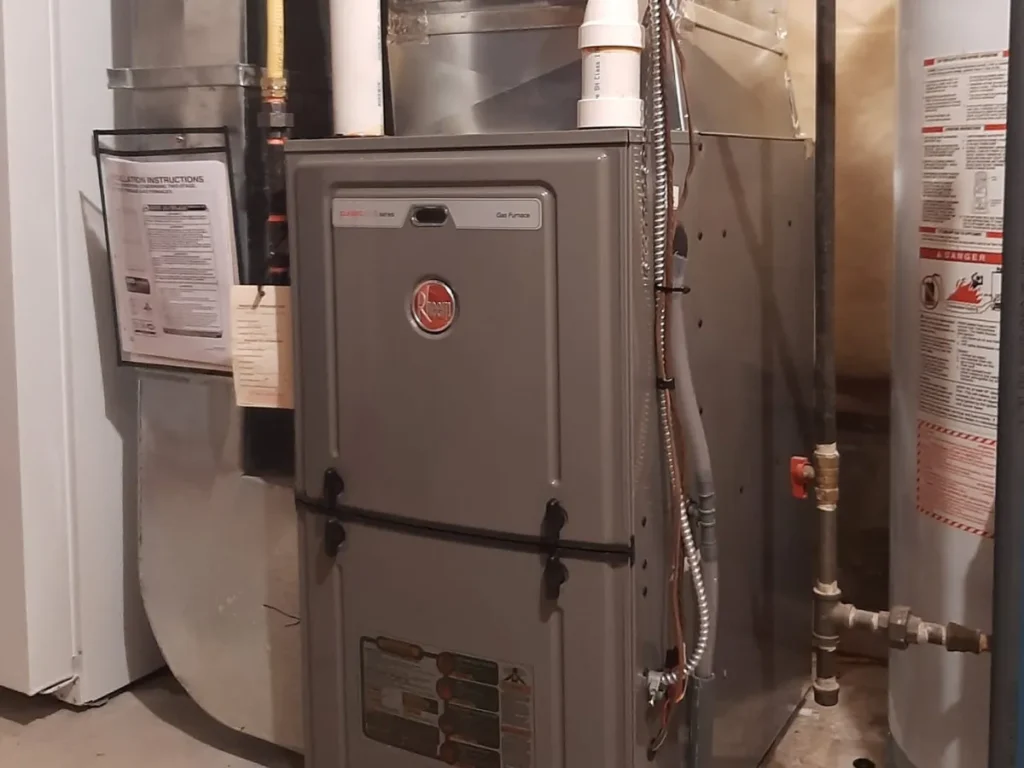
Colorado Furnace Rules Changed Mid-Year: What Homeowners Need to Know for 2026
Quick Answer
Colorado’s furnace requirements changed again in mid-2026. While the state’s new furnace emissions standards took effect January 1, a second important change arrived on July 31, 2026, when ENERGY STAR Version 5.0 took effect. The new ENERGY STAR standard increased the efficiency requirement for newly certified gas furnaces in Colorado’s region from 95% to 97% AFUE.
That doesn’t mean every new furnace installed in Colorado must be 97% efficient. Colorado homeowners still have different compliance options, including qualifying Ultra-Low-NOx equipment. Existing furnaces also do not need to be replaced because of the new standards and can continue to be maintained and repaired.
For Colorado Springs homeowners planning a furnace replacement, the mid-year change makes it more important to understand how a proposed furnace complies and what the efficiency rating actually means for your home.
Why Did Colorado’s Furnace Requirements Change Again in July?
There are actually two different changes at work here, which is one reason Colorado’s 2026 furnace requirements can be confusing.
On January 1, 2026, Colorado House Bill 23-1161 (HB23-1161) took effect for covered residential gas furnaces. The law established new environmental standards intended to reduce nitrogen oxide (NOx) emissions from certain appliances.
Then, on July 31, 2026, ENERGY STAR Version 5.0 became effective.
That matters because Colorado’s furnace law includes a compliance pathway tied to ENERGY STAR standards. When the ENERGY STAR furnace specification changed, the efficiency threshold associated with that pathway changed as well.
So, while Colorado didn’t pass a second furnace law in July, an important standard referenced by the law was updated.
What Changed on July 31, 2026?
Under the previous ENERGY STAR specification, qualifying gas furnaces in the Northern region could meet the ENERGY STAR efficiency requirement at 95% AFUE.
ENERGY STAR Version 5.0 raised the Northern-region gas furnace threshold to 97% AFUE for newly certified equipment.
Colorado is included in ENERGY STAR’s Northern region.
What Is AFUE?
AFUE stands for Annual Fuel Utilization Efficiency. It represents how efficiently a furnace converts fuel into usable heat over a typical heating season.
For example, a 97% AFUE furnace is designed to convert approximately 97% of the fuel it consumes into usable heat, with the remaining portion lost during the heating process.
Higher AFUE can mean lower fuel consumption, but efficiency is only one factor homeowners should consider when choosing replacement equipment.
Does Every New Furnace in Colorado Now Have to Be 97% AFUE?
No, and this is probably the most important takeaway from the 2026 update.
Colorado’s requirements provide different ways for qualifying furnace equipment to comply.
ENERGY STAR Pathway
A furnace can qualify through the applicable ENERGY STAR standard.
With ENERGY STAR Version 5.0 now in effect, newly certified gas furnaces in the Northern region must meet a minimum 97% AFUE requirement.
There is also an important transition detail: ENERGY STAR certification is based on the specification in effect on a furnace’s date of manufacture. Because of that, homeowners may encounter equipment manufactured under different ENERGY STAR specifications during the transition.
When you meet with Meyers, we’ll verify that the specific furnace being proposed meets Colorado’s current requirements rather than relying on AFUE alone.
Ultra-Low-NOx Pathway
Furnaces may also qualify through Colorado’s emissions requirements.
Qualifying Ultra-Low-NOx, or ULN, equipment is designed to limit nitrogen oxide emissions to the level required under Colorado law.
This means a compliant furnace does not necessarily have to be a 97% AFUE furnace.
We’ve covered Colorado’s Ultra-Low-NOx furnace requirements in more detail in our guide to the 2026 Ultra-Low-NOx furnace law.
Can You Still Install an 80% Furnace in Colorado?
Potentially, yes. Colorado did not simply ban all 80% AFUE furnaces.
An 80% AFUE furnace may still meet Colorado’s requirements if the equipment qualifies through the applicable Ultra-Low-NOx emissions pathway.
What has changed is the ability to install traditional furnace models that meet neither Colorado’s emissions requirements nor the applicable ENERGY STAR standard.
This distinction can be especially important for homeowners replacing an older 80% furnace.
Moving from an 80% furnace to a high-efficiency condensing furnace isn’t always a simple equipment swap. Depending on the home and existing system, changes to venting, condensate drainage, electrical components, or other parts of the installation may be required.
A compliant Ultra-Low-NOx furnace may provide another option depending on the home and available equipment.
Do I Have to Replace My Existing Furnace?
No.
Colorado’s 2026 requirements do not mean homeowners need to replace a furnace that is already installed and operating.
If your current furnace is working safely and reliably, you can continue using it.
You can also continue to have your existing furnace maintained and repaired.
The new requirements become most relevant when it is time to purchase and install replacement equipment.
If your furnace is aging, however, understanding the new requirements before an emergency replacement can give you more time to compare your options.
What Does This Mean for Furnace Replacement Costs?
There isn’t one universal answer.
Some compliant furnaces use high-efficiency condensing technology, while others meet Colorado’s requirements through Ultra-Low-NOx burner technology.
The cost of a furnace replacement depends on more than the equipment itself.
For example, replacing an older 80% furnace with a 97% condensing furnace may require changes to the home’s venting because high-efficiency furnaces operate differently than traditional furnaces. Condensate drainage may also need to be installed or modified.
That doesn’t mean a high-efficiency furnace is a bad choice. In many homes, the improved efficiency and comfort benefits can make it an excellent option.
It does mean homeowners should compare the complete installation, rather than simply comparing furnace efficiency ratings or equipment prices.
What Colorado Springs Homeowners Should Consider
Colorado Springs heating systems operate under conditions that aren’t necessarily the same as those in other parts of the country.
Our elevation, cold winter temperatures, dry Front Range climate, and significant temperature swings can all affect HVAC system design and performance.
Homes throughout Colorado Springs, Monument, Black Forest, Falcon, and Peyton can also vary considerably in age, construction, ductwork, and existing heating equipment.
When replacing a furnace, consider:
The home’s heating load and proper equipment sizing
Existing ductwork and airflow
Furnace venting requirements
The condition and configuration of the current HVAC system
High-altitude equipment requirements
Comfort concerns throughout the home
Energy-efficiency goals
Installation requirements and total project cost
Whether a furnace, heat pump, or dual-fuel system makes sense
Available utility or manufacturer incentives
The goal shouldn’t simply be to install the furnace with the highest efficiency rating.
The goal is to choose a compliant heating system that makes sense for your home, comfort needs, efficiency goals, and budget.
Are Furnace Rebates Available in Colorado Springs in 2026?
Potentially.
Utility and manufacturer incentives can change throughout the year, and eligibility often depends on the specific equipment being installed and the homeowner’s utility provider.
Colorado Springs Utilities customers should review current efficiency programs when considering new HVAC equipment. Homeowners outside the Colorado Springs Utilities service area should check with their individual utility provider.
What About Federal HVAC Tax Credits?
There’s another important 2026 change homeowners should know about.
The federal Energy Efficient Home Improvement Credit that previously provided tax incentives for certain qualifying residential HVAC improvements ended for property placed in service after December 31, 2025.
That means homeowners should not assume that a furnace installed in 2026 qualifies for the federal furnace tax credit that was available in previous years.
Utility, state, local, and manufacturer programs may still be available, so current incentives should always be verified before making a purchase decision.
How Should You Plan for a Furnace Replacement in 2026?
If your furnace is approaching the end of its useful life, you don’t need to rush into replacing it solely because Colorado’s requirements changed.
But you may want to start understanding your options before you’re making a replacement decision without heat on a January morning.
When comparing furnace proposals, one of the most useful questions you can ask is:
“How does this furnace comply with Colorado’s 2026 requirements?”
Your HVAC contractor should be able to explain the specific equipment being proposed, its efficiency rating, how it meets Colorado’s requirements, and whether installation requires changes to other parts of your HVAC system.
You should also understand whether the proposed furnace requires changes to venting, drainage, electrical components, ductwork, or other parts of the existing installation.
At Meyers Heating & Air Conditioning, we’ve been helping Colorado homeowners stay comfortable for generations. Our team can evaluate your existing system, explain the furnace options that meet Colorado’s current requirements, and help you determine which solution makes sense for your home, comfort goals, and budget.
Generations of Comfort, Since 1963.
Frequently Asked Questions: Colorado's 2026 Furnace Changes
What changed with Colorado furnace requirements in July 2026?
ENERGY STAR Version 5.0 became effective on July 31, 2026. For gas furnaces in the U.S. Northern region, which includes Colorado, the ENERGY STAR efficiency threshold increased from 95% to 97% AFUE for equipment certified under the new specification.
Does every new furnace installed in Colorado have to be 97% efficient?
No. The 97% AFUE threshold applies to the current ENERGY STAR compliance pathway. Qualifying furnace equipment may also comply through Colorado’s applicable emissions requirements.
Did Colorado ban 80% furnaces?
No. An 80% AFUE furnace may still qualify if it meets Colorado’s applicable Ultra-Low-NOx emissions requirements. An 80% efficiency rating by itself does not determine whether a furnace is compliant.
Do I have to replace my existing furnace because of the 2026 law?
No. Existing furnaces do not need to be replaced simply because Colorado’s new standards took effect.
Can I still repair my existing 80% furnace?
Yes. Colorado’s new furnace requirements do not prevent homeowners from maintaining or repairing their existing furnace.
What is an Ultra-Low-NOx furnace?
An Ultra-Low-NOx furnace uses combustion technology designed to produce lower nitrogen oxide emissions than conventional gas-burning equipment. Colorado’s 2026 requirements include an emissions-based compliance pathway for qualifying equipment.
Is a 97% furnace better than an 80% Ultra-Low-NOx furnace?
Not necessarily for every home. A 97% furnace offers greater fuel efficiency, but the complete installation, existing venting, home construction, comfort goals, operating costs, and budget should all be considered when comparing systems.
Are federal furnace tax credits available in 2026?
The federal Energy Efficient Home Improvement Credit that previously applied to certain qualifying HVAC improvements ended for property placed in service after December 31, 2025. Other utility, state, local, or manufacturer incentives may still be available.
Does Colorado's furnace law apply to heat pumps?
The furnace requirements discussed here apply to gas-fired furnace equipment. Heat pumps operate differently and are subject to separate efficiency requirements. Homeowners replacing a furnace may still want to compare traditional furnace, heat pump, and dual-fuel options.
Should I choose a furnace, heat pump, or dual-fuel system in Colorado Springs?
There isn’t one solution that’s right for every Colorado Springs home. Existing equipment, electrical capacity, home construction, utility costs, comfort preferences, installation requirements, and long-term efficiency goals should all be considered when comparing heating systems.